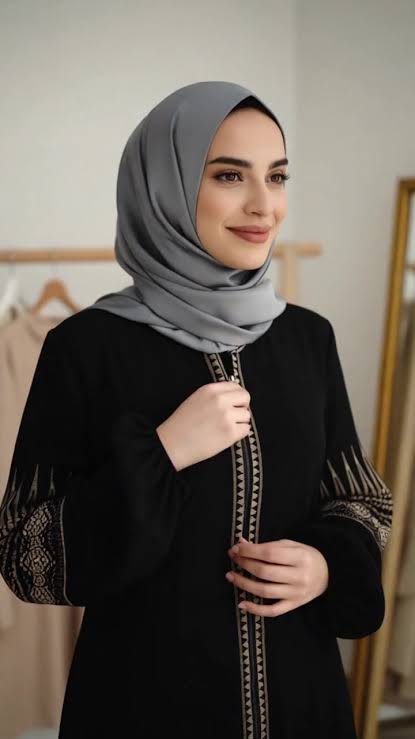
Islam: The Condition of Women
Pubblicato da In dies Info 12 ottobre 2026 2026
Islam: The Condition of Women
Introduction
In every conversation concerning Islam, discussion focuses primarily on the status of women. Muslims are accused of disregarding women's rights, freedom, and dignity. Muslims strongly resent this, speaking of misrepresentation and misunderstanding, and proclaim that Islam, on the contrary, grants women honor, dignity, and security:
“Islam guarantees social and civil rights to women. Today, people think that Western women are free and that the women's liberation movement began in the 20th century.
For us Muslims, the women's liberation movement was not inspired by human beings, but was revealed by Allah to a man in the 7th century named Muhammad (PBUH), best known as the last prophet of Islam. The Qur'an and the traditions of the Prophet (hadith or sunnah) are the sources from which every Muslim woman derives her rights and duties.
Fourteen centuries ago, Islam made women equal to men in every respect regarding glorification and turning to Allah, granting them limitless opportunities for their moral advancement.”
(from "World of Islam")
Certainly, the issue of women's standing is not only the most conspicuous, but is indeed fundamental: a woman's position strongly determines daily life and truly sets the tone of a society and culture. However, we must not devolve into polemics where each side asserts its own viewpoint and blames that of the other. In this article, we will seek to delve into the fundamental aspects of the issue, comparing the position of the Christian West and Islam—avoiding, as far as possible, value judgments that would merely reflect the values of one's own civilization without clarifying the problem or helping us understand others.
A Few Premises
One must not compare actual, widespread real-world situations with ideal, theoretical models that are largely disregarded in concrete reality. In comparisons, it is necessary to keep in mind whether one is referring to ideal or widespread models, to disadvantaged or elevated socio-economic conditions, or to exceptions versus common situations.
We must also keep in mind a fact we often tend to forget: in all great civilizations (Christian, Muslim, Indian, and Chinese), relations between men and women have always been shaped by two principles:
Hierarchy between man and woman
Division of labor: the woman takes care of the home and family; everything else falls to the man
These two principles appeared as natural, self-evident facts that were essentially never called into question. Only in modern times in the West have these principles been declared obsolete, though it remains uncertain to what extent this actually occurs in reality; listening to the claims of feminists, it would seem not very much.
Hierarchy and Division of Tasks
These two principles were challenged and overcome only in very recent times. Consider that until 1974 they were recognized in our family law, and spouses were reminded during the marriage ceremony that the husband was the head of the family and the wife had to follow him wherever he decided to go. Currently, full equality is enshrined in the legal system and in theoretical principles. Note, however, that these remain largely theoretical principles, as the two concepts continue to operate extensively in the actual realities of the West.
Deepening this issue would go beyond our scope; as an example, however, we note that in divorces and separations, children are routinely entrusted to the mother along with the marital home, while the father is obligated to pay maintenance.
It would therefore be unreasonable to expect to find in the Islamic tradition the overcoming of two principles that have only recently, and largely only theoretically, been overcome in the West.
Nevertheless, even within the framework of these two principles, the condition of women can assume a vast range of expressions. At the end of the 19th century, the position of an English Lady and that of a harem odalisque were governed by the same two principles of hierarchy and division of labor, yet they were vastly different! While in China a woman walked two steps behind the man in the street, in the West a man yielded the right of way to a woman, uncovered his head before her, kissed her hand, and maintained an attitude of "religious" reverence toward her—yet the two principles were active both in China and in the West. We must therefore go beyond general statements to grasp substantial differences.
Keeping in mind that Western civilization is nonetheless based on Christian premises—even for non-believers ("we cannot not call ourselves Christians," as Croce said)—and considering the importance religion has maintained for Arab (and Islamic in general) civilization, let us examine the religious premises of the issue.
The Gospels never explicitly address the hierarchy between man and woman; no specific precept is stated. In the Epistles, however, we have a fundamental passage from the Apostle Paul:
Ephesians 5:23–33
“For the husband is the head of the wife as Christ is the head of the church, his body, of which he is the Savior. Now as the church submits to Christ, so also wives should submit to their husbands in everything.
Husbands, love your wives, just as Christ loved the church and gave himself up for her to make her holy, cleansi
ng her by the washing with water through the word, and to present her to himself as a radiant church, without stain or wrinkle or any other blemish, but holy and blameless. In this same way, husbands ought to love their wives as their own bodies. He who love s his wife loves himself. Af ter all, no one ever hated their own body, but they feed and care for their body, just as Christ does the church—for we are members of his body.
‘For this reason a man will leave his father and mother and be united to his wife, and the two will become one flesh.’ This is a profound mystery—but I am talking about Christ and the church. However, each one of you also must love his wife as he
loves himself, and the wife must respect her husband.”
The principle of male-female hierarchy is recalled (the man is the head of the woman), but it is tempered by a mystical analogy (Christ and the Church) and by the call to the love that must unite the spouses.
In the Qur'an, on the other hand, male preeminence is stated with considerably greater rigor:
Surah IV An-Nisâ' (The Women), Verse 34
“Men are the caretakers of women because Allah has made one to excel the other, and because they spend of their property. So the righteous women are devoutly obedient, guarding in [the husband's] absence what Allah would have them guard. As to those women on whose part you fear disloyalty and ill-conduct, admonish them [first], [next] refuse to share their beds, [and last] beat them. But if they return to obedience, seek not against them means [of annoyance]. Indeed, Allah is Ever Exalted, Full of Majesty.”
As can be seen, male authority depends on God's will and the social order. If a woman does not submit to her husband, he first admonishes her, then suspends intimate relations with her (polygamy is assumed), and finally resorts to beating her. However, if the woman submits, she must no longer be mistreated.
To modern Western sensitivity, this passage is entirely unacceptable, particularly regarding the striking of a woman. In reality, however, it aligns with traditional practices that were not unique to Islam. St. Augustine, in the Roman milieu centuries earlier, speaking of his mother Monica, noted that:
“Many matrons, whose husbands were far gentler than hers, bore marks of beatings that disfigured their faces, and in conversations among friends they deplored their husbands' behavior.”
(Augustine, Confessions, Book IX)
And Trilussa, as late as the early 20th century, had a working-class woman say:
"Whether he beats me or not, he is my husband and can do whatever he pleases."
The issue comes back to the concept of Shari'ah and its interpretation. A broad, contextual interpretation can overcome the problem and bring it closer to Western sensibilities; a literal interpretation, on the other hand, makes it insurmountable. A devout Muslim who wishes to literally follow the Qur'an—which is considered not the word of Muhammad, but of God Himself—must demand obedience from his wife and must ultimately resort to physical force to compel it.
Conclusions
We must ask ourselves how well-founded the Western conviction is that Islam oppresses women, and how well-founded the indignant Islamic rejection of this claim is.
We have noted above the differences in the role of women in both civilizations; however, it seems to us that the core issue lies in the modern evolution of the concept of the female role itself.
A theorist of Islamic thought writes:
“The family is the primary unit of human life. It is within the family that the fundamental traits of human character are formed, and for this reason, the family is the basic element of any civilization.
Let us, therefore, first consider the Shari'ah regulations regarding the family. A family consists of husband, wife, and children. Islamic precepts concerning the family are explicit. They assign to the man the responsibility of carrying out gainful, productive work, providing his wife and children with everything necessary, and protecting them from the vicissitudes of life. They assign to the wife the responsibility of running the household, raising and educating the children, and providing her husband and children with every comfort and all possible happiness...
Someone must be the head of the family so that discipline can be maintained and the family can become an ideal institution of society. Islam gives the husband this position, making the family a primary cell of civilization and a model for society at large.
Furthermore, the head of the family has been burdened with certain responsibilities. It is his duty to work to provide for the needs of the household and manage all affairs outside the family. This frees the woman from any outside employment, which in the Islamic order falls under the husband's purview. She has been relieved of all external duties so that she may devote all her time to raising and educating the children, managing the household, and governing the home.
Women have been advised to attend to these vital duties entrusted to them within the home walls.
Islam, in its admirable order, did not wish to burden women with a double load: earning a living outside the home while simultaneously caring for the house and family. That would obviously be a social and human injustice. Thus, in its social order, Islam establishes a clear distribution of roles and functions between the sexes.”
(Abul A'la Maududi – Understanding Islam)
Such an argument would have seemed entirely agreeable until recently in the West as well, but an evolution has taken place. The role of wife and mother has come to be seen by the modern world as too restrictive for women, who now seek fulfillment and self-realization outside of it as well. This has not occurred in the part of the world dominated by Islam, but could it happen in the near or distant future? Even in the West, resistance was by no means minimal nor quickly overcome, and it remains far more persistent than it appears at first glance.
The question then presents itself in these terms: In the West, Christian churches viewed the evolution of women's roles with great suspicion, but did not radically oppose it because the Sacred Scriptures do not contain strict binding principles codifying women's roles—which were simply derived from the unanimous tradition of the era.
In the Qur'an, however, there are not merely principles, but precise rules of conduct believed to be dictated directly by Allah: is it possible to interpret them in a way that allows for an evolution of the female role? A positive answer would allow the role of Islamic women to evolve similarly to ours; a negative answer would lead to an irreconcilable conflict between Islam and the modern role of women.
Once, the Christian marriage vow involved a promise of "obedience" from the bride and "protection" from the groom; today, the marriage vows are identical for both. Will a similar evolution be possible within Islam?