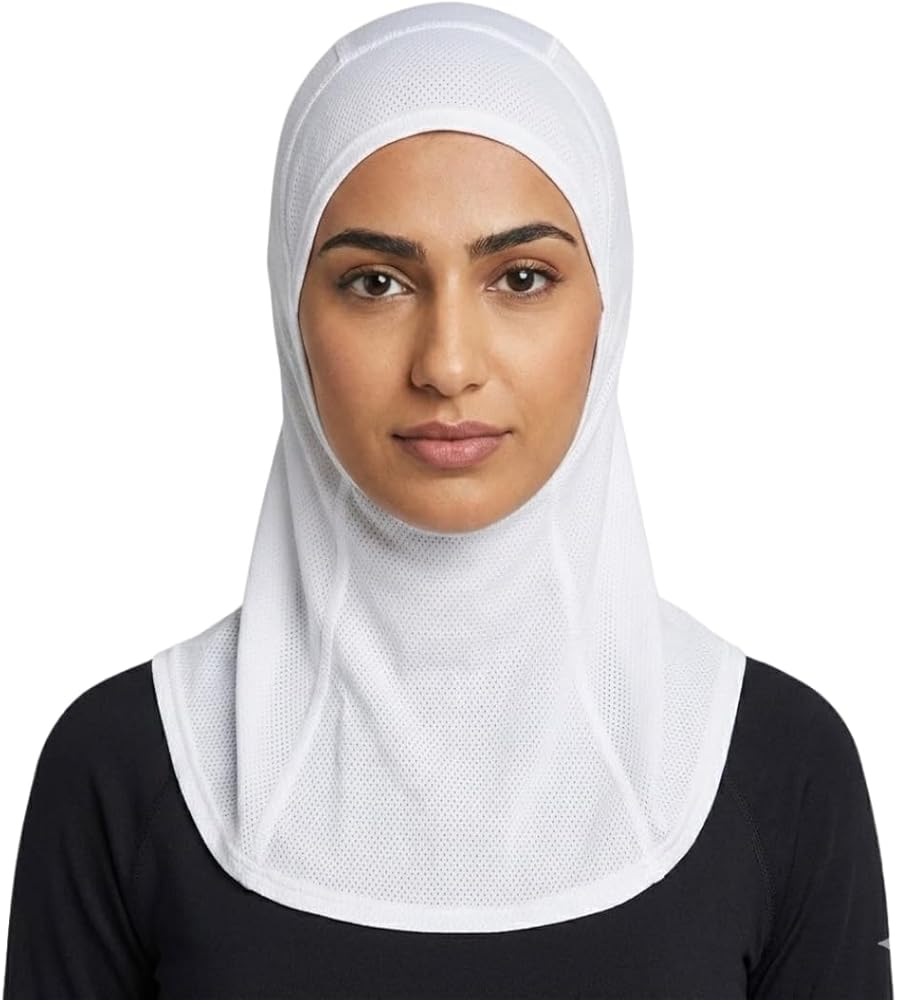
Islamic Veil
Pubblicato da In dies Info agosto 2026
In the West, we generally see the veil as a sign of women’s submission, but this is an unfounded interpretation.
All civilizations have standards of decency and modesty, both for women and for men, but there is no connection between rules concerning female modesty and women’s subordination.
We modern Westerners also have our own rules. One can wear a bikini at the beach, but not at school; full nudity is never acceptable. Men, too, are subject to rules of decency and propriety: one cannot attend a wedding in shorts.
Rules always exist, but they differ according to the culture. For example, in Greco-Roman civilization, statues often depict the nude body, including the female body, but this does not mean that nudity was accepted in real life: Roman matrons, of course, are always depicted fully clothed. In China, where the position of women was very low, there were no rules as strict as those that existed in medieval Europe, where, on the other hand, a certain cult of womanhood always existed (think of the Virgin Mary, the idealized “angelic woman,” and chivalry). In many primitive cultures, women go almost completely naked, but this certainly does not indicate equality between men and women. In some upper-class cultures in India, women went bare-breasted until this practice was prohibited under British rule.
In the world of the Qur’an, women are instructed to cover their “ornaments” (that is, their beautiful physical features), but the veil itself is not specifically prescribed. Indeed, there is the full veil (the Afghan burqa), a partial veil in Iran, the simple requirement to cover the hair, and also cases in which no veil is worn at all (as in Atatürk’s Turkey).
It is important to bear in mind that the issue is not the veil itself, but the fact that women’s clothing conceals the female body, whereas our clothing tends to emphasize it.
Above all, the veil has taken on another meaning today: the rejection of sex outside marriage and, for this reason, it has become a divisive issue.
It is not only the veil, but women’s clothing in general, that is intended to indicate a rejection of sex outside marriage and, therefore, to imply that women who engage in it are “whores.”
Until a few generations ago, we thought the same way.
The subordination of women prescribed in the Qur’an is something else. I would point out that it existed in all civilizations and that only in modern times has equality been established, at least theoretically, in our societies.
In recent years, the Islamic veil has truly become a bone of contention, a symbol of identity that is both challenged and defended, both in relations with the West and, above all, within the Islamic world itself. As an emblematic symbol, it has gone far beyond the issue of the veil itself.
Let us therefore examine the issue from an Islamic point of view. It is not merely a religious matter, but also a matter of custom and culture: one may not be a believer in Islam, but this does not necessarily mean that one rejects certain views concerning women’s clothing, just as was the case in the West. For example, positivism, although hostile to Christianity, was no more permissive in this regard; indeed, greater strictness in sexual morality occurred precisely during the positivist period (which we generally refer to as the Victorian era).
Let us therefore look at the source of the prescription in the Qur’an. The veil in Arabic is called hijab: literally, “covering,” which is translated as “veil,” thereby conveying an idea that is not entirely accurate.
The Qur’anic text states:
Surah XXIV, An-Nur (The Light)
“And tell the believing women to lower their gaze and be modest, and not to display their adornments except what is apparent; and let them draw their coverings over their bosoms and not display their adornments except to their husbands, their fathers, their husbands’ fathers, their sons, their husbands’ sons, their brothers, their brothers’ sons, their sisters’ sons, their women, those whom their right hands possess, male attendants without sexual desire, or children who are not yet aware of women’s private aspects.”
Christian tradition also speaks of women covering their heads. The Apostle Paul, in fact, states:
“Every woman who prays or prophesies with her head uncovered dishonors her head, for it is just as if her head were shaved. For a man ought not to cover his head, since he is the image and glory of God; but woman is the glory of man. For man did not come from woman, but woman from man. Judge for yourselves: is it proper for a woman to pray to God with her head uncovered? Does not nature itself teach you that if a man has long hair, it is a disgrace to him, whereas if a woman has long hair, it is her glory? For her hair is given to her as an adornment.” (1 Corinthians 11:6)
In simpler terms, the hair is considered an attribute of female beauty and, as such, should modestly be covered, also so as not to distract men from religious devotion. However, it is not prescribed outside religious practice. The obligation for women to cover their heads continued in the Catholic Church until modern times and was only generally abandoned in recent decades. Until a few years ago, in fact, women covered their heads when receiving the sacraments. The tradition has continued on solemn occasions, such as confirmation, first communion, and especially weddings. We would not normally imagine a bride without a veil; however, in this case the veil has completely lost its original purpose of covering the hair. It has become transparent, an ornamental element rather than an expression of modesty.
In the Islamic world, on the other hand, its use became widespread, also because women were not supposed to appear in public and, when they did, they were expected to cover themselves as much as possible. There is, however, a variety of veils: some cover only the hair, others also cover the face (the Iranian chador), and others cover the entire head (the Afghan burqa).
The problem lies in the meaning attributed to the term hijab.
For some, the Qur’anic prescription is interpreted as a simple invitation to modesty in women’s dress rather than as a strict religious commandment, and the veil is seen simply as a tradition that should now be overcome. From this perspective, many Muslim women no longer wear it; in many countries it has become uncommon, and Kemal Atatürk even prohibited it by law in Turkey.
For others, however, the veil is a fundamental religious obligation.
For example, in 1994, in Al-Turabi Hasan’s Women in the Islamic Order of Society:
“Since the Sublime Qur’an and the teaching of the Prophet, may Allah bless him and grant him glory, are binding upon the woman who believes in the divine origin of the Qur’an and in the prophetic mission of Muhammad, wearing the veil is therefore a precise and non-negotiable duty. The Muslim woman who wears the veil expresses through it, implicitly, her Islamic identity, and it is misleading to suggest, as is unfortunately common, that a woman who does not wear the veil can still be called a Muslim simply by saying that what matters is having faith within! They fail to recognize that the Prophet, may Allah bless him and grant him glory, clearly rejected this idea when he said: ‘Faith is not present within unless Islamic conduct is present to indicate its inner presence.’”
The issue became more complicated with the presence of a now considerable Muslim minority in the West. The question arose as to whether the veil could be worn in schools and offices, whether it should be considered an expression of cultural freedom or instead a symbol of discrimination and oppression of women, leading to appeals before judicial and political authorities.
We certainly cannot resolve the issue here, but let us make a few observations.
In itself, the veil, especially in its moderate form, which covers only the hair, is nothing strange: it is also present in our own tradition, and there is no obvious reason why women who wish to wear it should not be allowed to do so.
The Islamic veil, however, has a particular meaning in terms of modesty in women’s dress. We are now accustomed to seeing women dressed in extremely revealing clothing (think of thongs on beaches); naturally, the obligation to wear the veil means that a woman must be “very” covered. One cannot imagine a girl wearing a veil while also wearing a miniskirt or a transparent blouse. The veil therefore becomes a kind of restraint on the display of the female body. Women’s increasing exposure in the West occurred relatively slowly and encountered considerable resistance. From the perspective of Muslim society, it appears to be an incredible lack of modesty, completely unacceptable; the veil therefore becomes a drastic and reliable remedy. On the other hand, even in the West there are rules concerning women’s clothing: one does not dress in the same way at the beach, on vacation, at school, in church, or at formal ceremonies; one does not wear a bikini everywhere.
The veil also has a broader meaning. In the West today there is considerable sexual freedom, and premarital as well as casual sexual relations are widespread. Muslim society (as, historically, Catholic society did) does not seek to accommodate this custom. The veil therefore also becomes a symbol of a way of life that reserves sexual relations strictly for marriage.
Finally, the veil is a sign of Muslim tradition. It therefore becomes a symbol of cultural identity, displayed as a way of demanding respect and recognition.
These and other considerations are combined and confused in various ways, and the veil becomes an issue that cannot be addressed simplistically. In the West, these motivations are generally not fully understood: the veil appears simply as an element of women’s subordination and discrimination. Muslims, however, argue precisely the opposite: the principles of traditional morality symbolized by the veil are not against women but in their favor.
In the Muslim world, the veil is regarded, negatively or positively, as a reaffirmation of the letter of the Qur’an and of Islamic tradition, of an interpretation that we would describe as fundamentalist and that is therefore either opposed or defended.