US-Iran Agreement
Pubblicato da In dies Info 19 giugno 2026
Finally, after an alternation of contradictory news the likes of which cannot be remembered in living memory, the US-Iran agreement has been signed. It is correctly described as a memorandum of understanding, that is, a set of rules intended to lead, within 60 days, to an agreement that will bring an end to hostilities, if not actual peace. In fact, everything depends on the course of the negotiations, which, if they were to fail, could lead to a resumption of hostilities.
Just as when a war begins it is impossible to foresee its developments and consequences (in this case, the blockade of the Strait of Hormuz had not been anticipated), so too, in the case of peace, it is difficult to say what outcomes it may produce. For example, the Treaty of Versailles after the First World War seemed to mark the annihilation of German power and yet, twenty years later, it became the principal cause of the even more tragic Second World War.
Obviously, Trump loudly proclaims that he has won, but by now no one takes his statements seriously, as they are constantly contradictory.
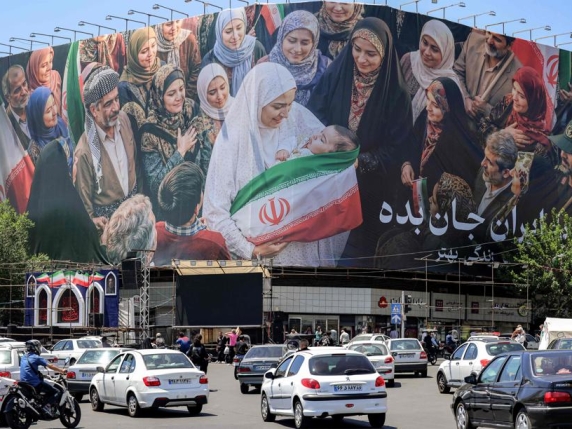
Equally, the Islamic Republic proclaims that it has achieved a resounding victory in the war, having resisted American overwhelming power with the help of Allah. Western commentators generally also acknowledge that, indeed, Iran can consider itself the victor.
It is necessary to examine the objectives of the war and the results achieved. It seems that the main objective was to prevent Iran from obtaining nuclear weapons which, in the hands of the ayatollahs, could have endangered Israel, the entire Middle East, and indirectly the West as well. Indeed, the essential point of the memorandum, in Article 8, is Iran’s renunciation of the production of nuclear weapons. However, Iran can easily declare that it has conceded nothing, because it has always officially denied wanting to build such a weapon, considering it inconsistent with the principles of Islam, and has only claimed to seek the development of peaceful uses of nuclear energy.
However, aside from the fact that it is rather strange for a country floating on a sea of oil to wish to build nuclear power plants, one must consider that for peaceful use it is sufficient to enrich uranium to a maximum of 5%, whereas in Iran enrichment had exceeded 60%. It is therefore quite clear that the real purpose of the programme was ultimately to obtain the bomb. In truth, in recent months there had also been signs that the religious authorities might have granted permission for its construction.
We can therefore say that the main objective has been achieved: Iran will not possess nuclear weapons. It is true, however, that this result had already been achieved by Obama eleven years earlier, and it was Trump himself, during his first term, who withdrew from that agreement in order to oppose Iranian intervention against Israel.
The other objective of the attack was Iran’s support for groups fighting against Israel: Hamas, Hezbollah, and also the Houthis. The agreement provides for an end to hostilities in Lebanon as well, while Hamas and Gaza are not directly mentioned.
As regards the other points, freedom of navigation through the Strait of Hormuz will be restored; however, there remains a possibility of control by Iran (and Oman) over those international waters.
International sanctions, which had strangled the economy, will also be removed. The uprising against the regime, previously limited to groups fighting for the emancipation of women, had in fact expanded to much larger masses suffering from the economic hardships caused by the sanctions.
Furthermore, the agreement provides for the release of Iranian funds held abroad and, above all, for 300 billion dollars from a not clearly defined reconstruction fund, which in practice amounts to war reparations.
It can therefore be considered a triumph for Iran, which has resisted the United States, obtained the end of sanctions that had paralysed the economy, secured the release of its frozen assets and, above all, obtained the 300 billion dollars from an unspecified fund, which take the form of war reparations that traditionally indicate the victorious side (for example, Germany at Versailles). Moreover, Iran does not abandon its allies fighting against Israel, which is a non-negotiable matter of honour.
The negative point regarding nuclear weapons can be dismissed by simply denying that such an intention ever existed.
Therefore, we can conclude that this is a victory for Iran, and we can also say that Israel’s operations in Gaza and Lebanon have not achieved their hoped-for objective, because Hamas continues to control Gaza, or what remains of it, and likewise Hezbollah controls southern Lebanon, from where attacks against Israel are launched.
However, we must also consider future developments in the coming years. What may be considered a victory for the forces aiming at the destruction of Israel has been achieved because the losses and disasters suffered have not been taken into account. Iran, in the struggle not only of these recent months but throughout its history, has suffered extremely serious economic and civilian damage and is prey to inflation and ever-growing poverty. Hezbollah has seen its territories devastated and has suffered heavy losses among its militants.
Hamas has seen Gaza reduced entirely to ruins, with an extremely high number of victims and, above all, an overwhelming human tragedy. It is therefore possible that, little by little, they may finally come to realise that these attempts to destroy the Zionist entity, the struggle against the small and the Great Satan, as Khomeini said, lead only to great and continuing disasters.
The whole course of events over these years demonstrates that the destruction of Israel is impossible and that it only leads to a succession of tragedies for those who attempt it.
One can only make hypotheses: we do not know whether this peace will last or what will happen as a consequence of it; it remains unpredictable.