The Latin term instrumentum regni (“instrument
of rule”) referred to the idea that rulers often
used religion to assert their power and pursue
their political aims, even though they were not
truly believers—or at least did not act for
religious purposes, but for political and
power-related ends.
The expression therefore had a negative connotation, synonymous with deception or imposture. Those in power invoked ethical and religious principles not because they believed in them or genuinely sought to uphold them, but merely as tools to achieve political rather than ethical-religious objectives.
However, this raises the question of whether it is really important that a ruler genuinely believes in the principles and goals they pursue, or whether what truly matters are the goals themselves, rather than the motivations behind their actions.
Let us remain, for example, within the religious sphere: consider Emperor Constantine. He was probably not truly Christian, or at least not particularly devout, and yet his edict paved the way for the definitive triumph of Christianity. So, is it really important whether he was a believer, or does what truly matter lie in the fact that, through his edict, Christianity moved from persecution to triumph?
We can extend this concept from religious matters to political ones in general.
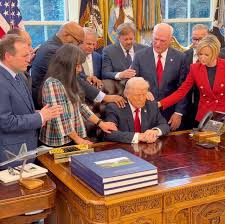
Taking an example from our own time: it does not seem that Trump is a genuine believer or a true supporter of traditional family values—on the contrary, it is clear that he is quite the opposite. Yet if his policies move in that direction and gain the support of the more traditionalist (or, if you prefer, reactionary) sectors of American society, then that ethical-political tendency is strengthened all the same.
A similar argument can be made regarding our Prime Minister, Meloni: in her speeches she speaks of the traditional family and of the imminent and serious danger of declining birth rates, which threaten our demographic stability and thus the very survival of our people. Yet her personal conduct does not seem to have followed that direction.
In our view, the issue in modern democracies can be framed as follows: in order to be elected and to govern, one must follow the prevailing general orientation of the nation, whatever it may be.
Some politicians act in this direction because they sincerely and deeply share it. Others, however, care little—or perhaps not at all—and act solely out of personal ambition.
So we must ask: is it truly important that a politician does what they personally believe to be right and good, or is it enough that what they do corresponds to what voters believe is right and good?
It seems to us that the difference is not so important: what matters is that they achieve the promised goals, not that they genuinely share them. If sovereignty belongs to the people, then it is the will of the people that counts, not that of those who lead them.
We might say that, more than sincerity and intellectual honesty, what matters in a politician is competence: it would be preferable to have a politician who can achieve the promised results even if they do not personally believe in them, rather than one who believes in them but is unable to achieve them.
Holiness and politics are different things: saints are generally not politicians, and politicians are not saints.