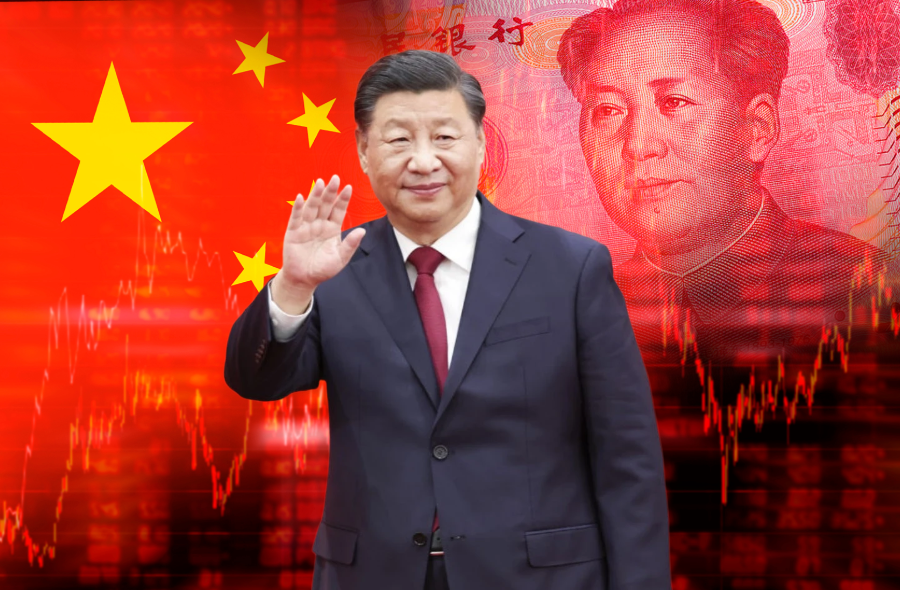
Upon hearing the news of the Israeli-American attack on Iran, China officially declared its concern, and it expressed equal concern about the Iranian counterattack that struck the Arab states of the Gulf.
Within every European state, by contrast, fierce debates break out about what position should be taken regarding these events. For example, in Italy the opposition harshly attacks the government in Parliament because it does not take a clear position.
This is not a particular case but rather a different political line followed by the Chinese compared with Western countries.
In its international relations, China in fact limits itself to commercial aspects and to relations between states, and it does not at all concern itself with the political line followed by governments. It does not matter whether a system is democratic or dictatorial, whether it follows a secular (or atheist) line or a strictly religious one, or whether civil rights are respected or not: China does not take a position even in the face of conflicts between states.
In the specific case mentioned, it does not enter into judgments about the policies of Israel, the Emirates, or Iran. These are matters about which, at most, it expresses concern about the consequences, but it does not give judgments about their validity, appropriateness, or justice.
Such an attitude has allowed China to maintain relations with all states: none of them fears being sanctioned or discriminated against because of its political line or form of government, nor does it fear any intervention.
In this way, in practice, China has largely replaced Western countries in what was once called the Third World: in Africa, in the poorer parts of Asia, and in Latin America.
It should be noted, however, that Chinese goods cost so much less than Western ones that this is the most important reason, although the attitude of political neutrality also has its impact.
Western countries, on the other hand, judge the entire world on the basis of their own cultural parameters and their own ideology, considered the only true one or at least a superior one. Every state is evaluated from the point of view of democracy, human rights, the condition of women, and so on.
All this creates an obstacle to both commercial and political relations with other states. Sanctions and trade bans are imposed almost everywhere, from Russia to Iran, from Korea to Venezuela.
China, on the other hand, has no sanctions against any state (at least it seems to me). Yet sanctions do not harm only the countries that are their victims, but also those that impose them. If one buys something from someone, it means that it is advantageous to do so. When this is prevented by sanctions, the damage falls on both nations: the one that imposed them and the one on which they were imposed. For example, it is true that sanctions against Russian gas have harmed the Russian economy, but it is also true that they have caused damage—perhaps even greater—to Germany and to Western Europe in general, which has had to obtain it at a much higher cost.
However, even in the West a line similar to the Chinese one is beginning to make its way.
The United States seems to be the first Western country to have renounced defending Western values in the world. It seems that it too, like China, wants to follow the principle that each country may behave as it thinks best, provided it does not create dangers or cause damage.
It is therefore welcome if democracy is established, but we cannot impose it without risking disasters like those in the Middle East during the time of the neocons and George W. Bush.
Thus it does not matter whether Venezuela has a dictatorial or a democratic regime, but only that it is not hostile. Similarly, for Iran it does not matter whether it wants to follow sharia or religious freedom: these are matters they must settle among themselves.
What matters is that they do not wish to destroy Israel, seen as the armed outpost of the West.
What still distinguishes Chinese policy from that of the United States is that the former never intervenes with armed force, nor even with more or less ineffective and harmful sanctions, whereas America—at least under Trump—uses its predominant military power, opening conflicts whose duration and outcome no one can foresee, and imposes sanctions and tariffs almost everywhere.
But Trump is not America: they are different things. In a few years Trump will no longer lead America, and we do not know who will take his place or what policies he will follow.
Perhaps it would be desirable for the next president to follow China’s line of non-intervention—or perhaps not. I do not know whether the absence of the great world powers would reduce or increase conflicts in the world.
One must also take into account the different political systems. China is a single state governed by a single power. The West, on the other hand, is fragmented into a large number of states, each of which, in some way, gives a different emphasis to its own policy. Above all, these are democracies in which political power is limited and controlled by other institutions, and in which it must answer to public opinion, which can periodically replace it. One may think, for example, of the U.S. Supreme Court declaring illegal the entire tariff policy on which foreign and economic policy had been based, and of the fact that Trump must constantly take into account the moods of voters and of his electoral base.
Xi Jinping has said that in this way democracies can only act in the short term and cannot plan the future for their countries as the Chinese leadership can.
In reality, democracies have their own strength and an economic success far greater than that of totalitarian systems precisely because they are based on consent. Nevertheless, one must also acknowledge that in international relations their action is considerably limited by their own institutions.