The Myth of International Law
Pubblicato da In dies Info 9 gennaio 2026
The Force of Law
For some years now, since the outbreak of the
war in Ukraine, one hears everywhere—on talk shows and in interviews with more
or less famous figures—that we have entered a new era in which international
law, the rules governing coexistence among States, is no longer respected: in
short, a world in which the force of law is increasingly being replaced by the
law of force.
From these considerations arises a strong pessimism about the evolution of
historical events and the perceived need to make every effort, even military
ones, to return to a world order founded on international law.
It has been argued that if we allow Russia to prevail over Ukraine, then every State will feel authorized to attack another, and thus the strong will prevail over the weak; hence the necessity of helping Ukraine even, in the end, with an armed intervention: in short, a war to prevent wars.
This line of argument has gradually become broader and more pervasive with the tragic events in Gaza and, in recent days, even more so with the kidnapping of a head of state, Maduro—something that seems to us without precedent.
We do not intend here to enter into the merits of the various crises currently present in the world, but only to examine the soundness of the claim that, in today’s world, force is prevailing over law in international affairs and that a world without rules is therefore emerging.
The problem we therefore pose is this: does there exist a body of law that governed the world in a past that we may call recent?
The idea that law and rules should prevail over wars, thus inaugurating an era of peace and prosperity, took strong hold at the end of the First World War. The terrifying disasters it had caused pushed everyone to ensure that another tragedy should never happen again, and the League of Nations was founded, above all under the idealistic and pacifist impulse embodied by U.S. President Wilson, but felt throughout the world. The institution, however, functioned very little: the United States soon withdrew, exacerbated nationalisms (fascisms) asserted themselves, and after twenty years the world plunged into an even greater catastrophe, the Second World War.
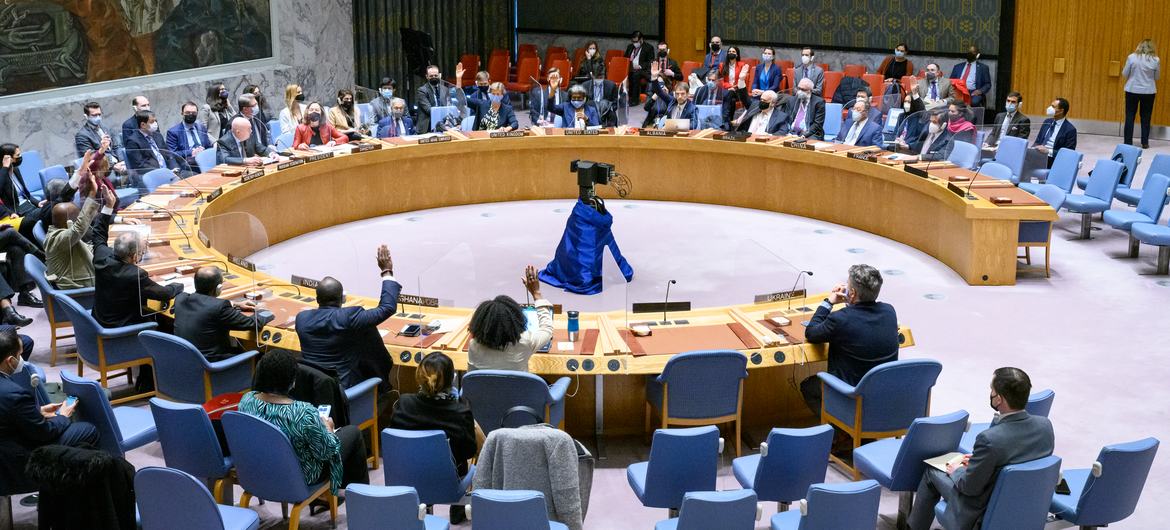
At the end of that war, in order to avoid a new catastrophe, the United Nations was founded, an organization that was supposed to resolve all international disputes peacefully, inaugurating a new era—hoped to be definitive—of peace in the world, relegating wars to a barbaric past to be forgotten. The Nuremberg Trials also seemed to mark the moment of the triumph of justice over human wickedness.
Conflicts over the Last 80 Years
In fact, there has been no Third World War (between the West and the communist world), but the reason was quite different: the presence of nuclear weapons, which made a new war between the powers that possessed them (the USA and the USSR) impracticable.
In reality, at the end of the world conflict a new confrontation immediately took shape between the communist world (Russia, its European satellites, and China) and the democratic world (or, if you prefer, capitalist), led by the United States.
Communists believed that capitalism had to be overthrown worldwide through violent revolution of the Russian and Chinese type and that humanity as a whole would thus be liberated (proletarian internationalism), while Truman, U.S. president, articulated the doctrine of containment of communism.
Thus, a new global war did not break out, but rather a series of armed clashes and civil wars: we recall the Korean War, the long and dramatic war in Vietnam, those in Cambodia, and finally the first Afghan war; the repressive interventions in Europe (the Berlin blockade, East Germany, Hungary, Czechoslovakia, Poland). In reality, fighting took place almost everywhere in the so-called Third World—in Africa, the Middle East, and Latin America—according to a global pattern in which communists and anti-communists intervened in support of the faction considered closer to them.
None of these conflicts were in any way stopped by the UN, and no one adhered to the norms of international law that would have prevented them.
The Cold War ended only when one of the parties, the communist one, collapsed because of internal difficulties in a sudden and unexpected manner.
Alongside it there was another global confrontation, which led to the end of colonialism. In colonial countries, liberation movements arose and clashed with the colonial powers. In fact, European countries, in general, did not put up much resistance and soon accepted withdrawal, seeking only to maintain a certain influence (neocolonialism). In some cases, however, there were extremely violent clashes, as in Algeria, due to the presence of a very large French settler population (the pieds-noirs), and Portugal resisted until 1974, when democracy also took hold there.
In many former colonies there were then violent clashes among the various ethnic groups present, also because borders were entirely artificial and, in any case, ethnic groups were intermingled. One recalls above all the drama of India divided between Muslims (Pakistan) and Hindus, which first caused a terrible ethnic cleansing and then three wars, and still today a dangerous conflict over Kashmir.
One also recalls the tragedy of the Congo and, more generally, throughout sub-Saharan Africa bloody conflicts are endemic.
Here too, it was not the case that rules or UN arbitration were adhered to, and no situation was resolved by the UN.
A third conflict, much smaller but particularly striking, was that between Israelis and Arabs, still ongoing in dramatic form. The UN recognized and sanctioned the formation of the State of Israel within certain borders, but upon the withdrawal of the British, conflict immediately broke out between Jewish settlers and Arabs, who attempted to eliminate the State created by the UN. Israel’s borders were expanded, and there were subsequently three more open wars between Arabs and Israelis, followed by an endless series of armed clashes, culminating in the last two years in the tragedy of Gaza.
In this case as well, international rules have not worked: the UN has been entirely unable to stop this tragedy, which has now lasted for 80 years.
With the collapse of communism, it seemed that all conflicts could be controlled, especially by the United States—an American peace, one might say. But it was not so.
With the end of Yugoslavia, an ethnic conflict broke out, halted only by armed intervention by NATO.
In the Middle East, Islamic fundamentalism exploded. It first asserted itself in Iran with Khomeini and then spread more or less everywhere, divided into two hostile factions, Sunni and Shiite. There was thus a war between Iran and Iraq for eight years. With the attack on the Twin Towers, the West became directly involved, with the invasion of Afghanistan and Iraq. Subsequently came the formation of ISIS (the Islamic caliphate), with an impressive series of massacres, and then the disintegration of States such as Syria, Lebanon, and Yemen, still ongoing. In the days of the kidnapping of Maduro, French and British aircraft bombed ISIS bases in Syria.
Conclusions
The rough analysis of events presented here has been offered by way of examples and could obviously be expanded, but in (almost) no case would one find respect for the order outlined by the UN and for its resolutions, which have proven completely ineffective.
How, then, can one think that the world order is now declining and that force is only now prevailing over law?
The idea of a universal peace founded on principles of law has always been a beautiful illusion, but it has never worked.
The UN and other international organizations can nevertheless be useful in many cases and functions, but they are unable to impose peace above the will of individual States. There are also troops operating under the UN to monitor compliance with agreements between States, but certainly not to impose them according to principles of international law.
We ask ourselves why this dream of an international law that regulates conflicts and prevents wars has never worked.
One could say: because of human wickedness. Certainly, in general terms, there would be no evil in the world if it were not present in human beings.
In concrete terms, however, at the international level, a legal order such as exists within nations is not possible.
Indeed, within the State there exists a coercive power that enforces precise codified norms, but at the international level this power does not exist and cannot exist if every State is autonomous: the sovereignty of a State is defined as superiorem non cognoscens.
Above all, however, the rules of domestic law correspond more or less to what the majority of citizens consider just. If at one time the man in the family was designated by law as the head of the household, today equality between spouses has been established, and family law has followed this evolution.
In the world, civilizations are still very different: in some States polygamy is also recognized, for example, and in general male authority prevails.
Now, if we look at the conflicts we have mentioned, we realize that, regardless of more or less hidden concrete interests, there are different, opposing ideals.
During the Cold War, some viewed communism as the perfect society outlined by Marx, while others saw it as dictatorship, misery, and oppression.
In colonialism, some believed that Europe had a civilizing mission (the white man’s burden, as Kipling put it), while others believed it was merely exploitation and that, once free, peoples would achieve prosperity and freedom. Thus, in the Arab-Israeli wars each side believes itself to be in the right; indeed, a significant portion on both sides even believes that God has assigned them the whole of Palestine and that it would be blasphemous to renounce even a single piece of it.
Likewise, in Islamic fundamentalism there are those who believe that by attacking American skyscrapers they are doing God’s will and thus going directly to paradise, and those who consider such acts to be horrific crimes.
Conflicts arise when ideas of what is just, good, and lawful differ greatly between the two sides, and thinking that issues can be resolved simply by applying the law is not possible, because each side has different ideas about what is just.
What can prevent wars is compromise, not the triumph of justice: whoever seeks a “just peace” in reality seeks the victory of one of the parties in conflict—that is, the continuation of the war until that occurs.
We can judge the actions, positively or negatively, of Putin and Zelensky, of Netanyahu and Hamas, of Maduro and Trump from many points of view, but it makes no sense to start from an international law that is, in reality, nothing more than a beautiful illusion.