The concept of ethical-scientific research requires some clarification. One might rightly object that, in fact, the two terms are contradictory. Science and ethics have fundamentally different objects and methods. Science, in fact, addresses the question of “how reality actually is” and not of “how it should be,” whereas ethics, on the other hand, aims to indicate how the world ought to be, not “how it is.”
For example, a doctor is concerned with whether a patient is affected by a certain syndrome and does not question whether this is right or wrong. In ethics, however, the occurrence of an event does not indicate whether it is permissible: even if many, or even all, people steal, this does not mean that stealing is good. Indeed, we can say that we are all imperfect; in the Christian sense, we acknowledge and are all sinners—but this does not mean that sin ceases to be sin, nor that one should not struggle against it.
Science and ethics, therefore, have different natures and seem irreducible to one another. So, what is the point of talking about the ethics of scientific research? First of all, it must be clarified that ethics does not aim to set limits on science: it is obviously not about rejecting scientific conclusions that are or seem to be in conflict with ethical demands. It is always a serious logical error to confuse “what is” with “what ought to be.” Otherwise, we risk repeating cases like that of Galileo, which had such a negative impact on faith and on the Church.
We are talking about “scientific research,” not “scientific conclusions.” Let us consider some examples.
It is said that Emperor Frederick II of Swabia ordered that certain children be raised without anyone ever speaking to them, to see which language they would use. It is reported that the children all died and the experiment produced no results. Apart from the fact that the story is almost certainly legendary, it is clear to everyone that experiments of this kind cannot be conducted for ethical reasons.
Moving to unfortunately real events, Nazi concentration camps conducted medical-scientific experiments on prisoners: everyone is horrified by this, and those who carried them out are unworthy of being called scientists, doctors, or even human beings.
Indeed, no one doubts that children or prisoners cannot be used as experimental subjects, as Frederick II and the Nazi doctors did: human natural rights are such that even scientific research must yield.
It is therefore clear to everyone that scientific research (not scientific knowledge) must have limits: this seems absolutely peaceful and self-evident. So why so much discussion, and often acrimony, particularly toward the warnings of the Catholic Church, and even accusations of obscurantism?
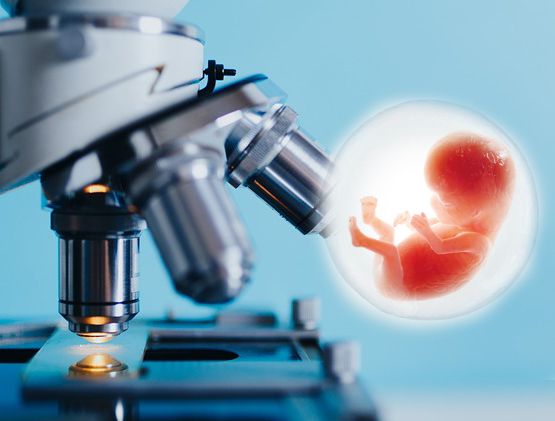
The problem is that the new frontiers of biomedical sciences pose new ethical problems, which find no precedent in the established ethical tradition. In particular, the fundamental question is: when does a human being become a human being? At conception, at birth, or at some intermediate stage? And, therefore, is it permissible to manipulate fertilized eggs, fetuses, or unborn children? These are serious issues that affect the very foundation of every civilization’s values: the value of human life itself.
From this perspective, scientific research must take ethics into account. As the Church rightly asserts and teaches, one cannot act based on a supposedly abstract principle of freedom of research: every freedom is truly concrete when it meets its limit.
Another problem concerns the use that can be made of scientific discoveries: is it permissible, for example, to choose the sex or physical and psychological traits of one’s child? But here the issue is no longer research itself, but the use of science; we will discuss this another time.