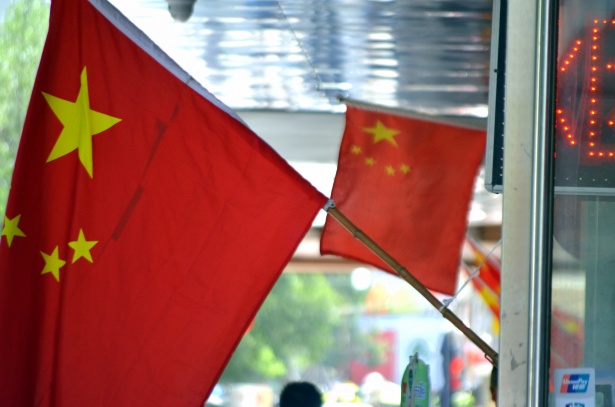
Two events in China have captured the attention of all mass media and political commentators: the Shanghai Cooperation Organization (SCO) meetings in Tianjin and, above all, the celebration of the 80th anniversary of China's victory over Japan. The latter was marked by a magnificent military parade in Tiananmen Square, attended by a large number of heads of state. Putin and Kim Jong-un were notably present, while India's President Modi and others attended the first event but not the second, which is a noteworthy detail.
In these events, commentators almost unanimously saw the end of an era dominated by Western supremacy and the birth of a new, multilateral world order—one where the rest of the world is able to counterbalance Western influence. While this is undoubtedly true, it's important to clarify what is meant by "the West" in this context.
What Is the West?
The term the West generally refers to one of the four great historical civilizations, alongside the Chinese, Indian, and Islamic. The West was the first to expand across the seas, discovering and conquering the Americas and coming into contact with India, China, and all other parts of the globe. In the 17th century, it founded modern science, and by the 19th century, it had initiated technical inventions (from railways to radio) that made it materially superior to all others. By the end of the 19th century, it directly or indirectly controlled the rest of the world through colonialism.
From a political standpoint, democracy and liberalism originated among Europeans and were established after a long and dramatic journey. This path included the French Revolution, the 19th-century struggle between reactionaries and liberals, and the great 20th-century clash between democracies, fascisms, and communisms, which ended with the bloody defeat of fascism and the dissolution of communism. As a result, the West currently represents economic prosperity (technical inventions) and democracy (freedom, rights). It is worth noting that some Far Eastern countries, such as Japan, South Korea, and Taiwan, have adopted the Western economic and political model, achieving economic prosperity and political freedom. These countries were not present at the meetings in China.
A Disparate Alliance
The front that appeared to form at the Tianjin and Beijing meetings is actually composed of a very diverse group of countries that are difficult to categorize together.
-
Russia can be considered part of Western civilization, though it represents a kind of periphery. For 70 years, it was the model of global communism, but when that system dissolved, it lost this role and split into 14 states.
-
India has a more or less democratic system inherited from British influence, but its cultural roots are very different. It is making economic progress, but rather slowly.
-
China, after the immense tragedies of the last century, has seen rapid progress over the last 30 years and a remarkable technical development. However, its per capita income is still very low compared to Western standards.
-
Some Arab countries that were also present (especially Iran) are overwhelmed by religious wars and irreconcilable, continuous conflicts.
-
North Korea, led by the grotesque dictator Kim Jong-un, is still mired in a form of archaic communism with nationalistic characteristics.
So, what unites them? It's not economic prosperity, a common political system, or shared economic interests. There are no common cultural roots either. For example, in the realm of religion, we see a spectrum from the majority skepticism in China (similar to the West), to the profound religiosity of India, to the fundamentalism (what we call fanaticism) of the Islamic world.
What remains is only the aspiration to reject Western supremacy, which has been the practical reality for the last two centuries. This entire situation signifies that we in the West should not believe, as we generally do, that all our values and ways of life are the only right and true ones—or at least the superior and therefore universal ones. The majority of the world was represented in Beijing, and they do not see things as we do. They have other ideas and principles, which also vary among themselves. For example, we see Russia as entirely in the wrong and Ukraine as entirely in the right. But the rest of the world, the majority of the world represented in China, does not judge the situation as we do. They don't consider Putin a criminal but a respectable leader.
The Sunset That Never Came
Talk of the "decline of the West," inspired by Spengler's famous essay, has been going on for about a century, but in reality, the West is not declining at all. Not only does it have the most prosperous economy, but it also maintains its leadership in the sciences, which has been its strength and what allowed it to dominate the world. While it's true that China has become the world's factory, supplanting the West, scientific and technological discoveries are still overwhelmingly Western. The latest major technological revolution, the digital one, is a Western product, as are almost all discoveries in other fields. Western universities are sought after by students from all over the world; Chinese students seek out US universities, not the other way around.
However, we must also understand that not everything is science and that ways of living and viewing reality can be very different. It seems to me that the real decline of the West may come from its low birth rate. This would suggest that our way of life is leading to our self-destruction.
We don't know for sure. The answer will be for future generations to decide.