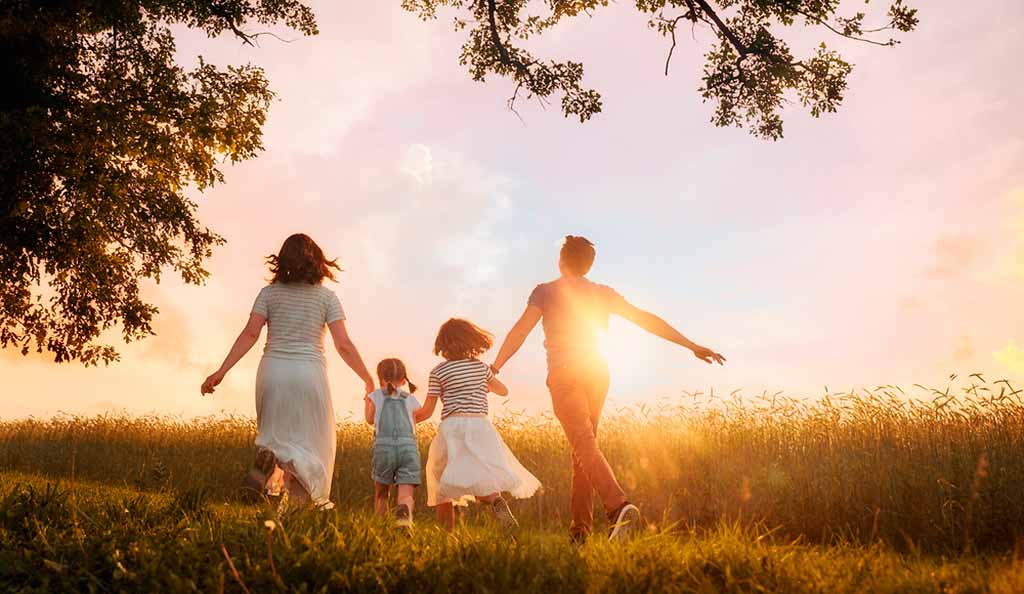
In the West, the family has been in a state of crisis for some time. However, a certain school of thought believes that this isn't a bad thing but rather a sign of the times evolving toward greater freedom. This perspective suggests that the functions of the family are now being more effectively carried out by the community—or more accurately, by the many communities that make up modern society. Schools provide education, healthcare facilities manage health, and a myriad of organizations—from sports clubs to chess clubs—satisfy the interests of everyone. There's also the massive development of information technology, where you can find everything online.
The family, therefore, seems almost stripped of its traditional duties, which, it is said, were based on authority and rigid roles—in short, on a lack of freedom. Let's take a closer look at this issue.
First, I would point out a fact that often escapes common knowledge: historically, institutions and organizations dedicated to children (and adults) have always existed; they are certainly not a modern invention. In fact, historians tell us that in the past, life was lived outside the family much more than it is today. For example, children from common families were often placed with master craftspeople, and in wealthy families, boys were sent to boarding schools and girls to convents at an age and for a duration that would be inconceivable to us now. The idea of going to school or learning a trade while still living at home is a modern development. Contrary to popular belief, the amount of time dedicated to the family in the past was incomparably less than it is today.
What has changed is that our standard of living is incomparably higher, offering a vast range of choices that were once unimaginable. However, this doesn't mean the family was less important or that it's in a state of crisis today. In reality, the role of the family is not an alternative to that of the community. Education isn't the work of one person on another (a parent or teacher on a child or student); instead, the entire community educates and transmits what we call culture in a sociological sense. If we now abhor war while our grandparents, as young fascists, dreamed of it, it's because the culture of the entire society has changed, not just that of the individual families we belong to.
The fundamental role of the family is love. No human feeling is comparable to that of a mother holding her child close. It's a natural, unconditional feeling above all others. If we see a mother harming her child, we consider her insane because this is the strongest and most unconditional natural feeling. Fathers, too, think about and provide for their children above all else, although unfortunately, there are exceptions. In short, the family is a natural society founded on natural and unconditional love.
It's also not true that communities provide more freedom than families. Generally, they have more rigid rules; there is certainly no more freedom at school than there is at home. Of course, there can be tensions between parents and children; in fact, they are completely natural during adolescence. An adolescent must form their own personality, which is different from that of their parents, so conflict becomes natural, inevitable, and I would even say necessary for their development. There are also misunderstandings where good and evil can be understood differently by parents and children, which inevitably leads to conflict.
However, what cannot be doubted is the true and deep, often heroic, love that binds a family. In other institutions and communities, from school to sports clubs, nothing guarantees such a strong bond. A teacher can love their students, but it is not the same absolute and unconditional love that a mother has for her unique child. In fact, even in modern society, this principle is recognized. In the past, children without parents were entrusted to orphanages, but now, so-called family homes are preferred, as they at least have the unique characteristics of a family, thus acknowledging the educational and emotional superiority of the family over the community.
Unfortunately, the crisis of the family—marked by divorce and temporary unions—weakens the awareness of its fundamental function: the continuation of life, not only materially but also culturally. The desire to have children is still very strong, but the family structure makes the role of parenthood increasingly difficult and complicated. The family, viewed as a free and temporary union, comes into conflict with procreation. The result is a decline in birth rates below the replacement level. The problem is that if we fail to reverse this demographic trend, our civilization will be swept away and replaced by other peoples with a culture more favorable to the family—I would say, more in line with nature.