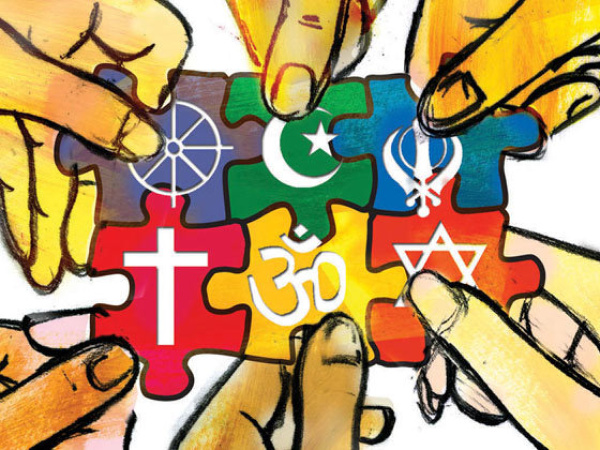
It is common in our times (and not only ours) to think that religion represses
personal freedom—that it forces us to renounce our desires. Therefore, freeing
oneself from religious beliefs would mean liberating our will to follow what we
desire.
In a certain sense, this can be considered true, but it’s important to clarify
what we mean by "freedom," a word which—like all important words—can mean
everything and its opposite.
For our discussion, I would suggest two main meanings: freedom in the realm of
personal action (we can do whatever we want), and freedom in the socio-political
sense (we can publicly express our opinions, whatever they may be, and possibly
spread them).
Let’s examine the first meaning: can we truly do everything that comes to mind? No one seriously believes that we can act without clear limits. If someone is unpleasant to me, that doesn’t mean I can kill them; if I’m attracted to a woman, that doesn’t mean I can assault her. We are social beings, we live in a society, and we cannot live in it without respecting its rules. Unlike social animals, we do not have an instinct that rigidly guides us to follow natural rules—human rules are flexible and vary across societies. Thus, it takes conscious effort, sometimes truly heroic, not to break them. It is therefore unthinkable that a person could always do whatever comes to mind; there are countless limits.
It is not religion, then, that imposes limits, but our very human nature. According to Catholic thought (and, generally, to all religions), being free does not mean doing whatever we feel an impulse to do, but rather following our own nature: we are free, in other words, when we fulfill our nature. For example, the family founded on marriage and the raising and education of children is something that fulfills our nature: without it, humanity would die out. Of course, the family brings with it a series of obligations and needs that deeply condition our entire lives. Yet without family, without conjugal love, without the smile of children, we are unhappy because we have not fulfilled our true nature.
We can also add that if some people freely choose to renounce marriage to dedicate their entire lives to the service of God (in the priesthood, religious orders), or even to another cause, they are still fulfilling their nature in their elevation to God; indeed, this condition is generally considered a privileged one.
The question, then, is whether this or that religious prescription fulfills human nature—not whether religious precepts are in themselves a restriction of freedom, rather than a form of liberation. For example, which is more in line with human nature: Christian charity or the domination of Nietzsche’s Übermensch?
The other aspect is political: can a religion
be imposed even on those who, for whatever reason, wish to follow another
religion—or none at all?
It is true that you cannot force someone to believe in something they don’t
believe in: conviction is always necessary. However, in the past, Christianity
did at times use force to prevent the spread of doctrines considered contrary to
the faith, and there were persecutions—sometimes serious and bloody. Think of
the terrible wars of religion.
In fact, until quite recently (short by historical standards), freedom of opinion was not accepted in any field—religion included. Only when freedom of opinion came to be accepted in all areas did it also begin to be accepted in religion (though not without a long struggle). Today, Christianity accepts—and even champions—religious freedom. What has changed in the socio-cultural sphere is the idea that no one can claim to possess the final and ultimate truth. In a democracy, decisions are made by majority vote while respecting individual freedoms, and it is rightly said that religious freedom is the first and the root of all other freedoms.
It must be clarified, however, that freedom of opinion does not mean that everything is true or that everything is false—it means that everyone believes their own opinion to be the true one, but respects the opinion of others. In other faiths, however, the idea of religious freedom has not yet been embraced, particularly in Islam. This is not necessarily due to the religion itself, but rather to the fact that the peoples among whom it is widespread have not yet embraced the idea of freedom of opinion—and thus also of religious freedom.