Why Do Poor People Vote for the Right?
Pubblicato da https://www.americacallsitaly.org/in The success of the political right 10 settembre 2026
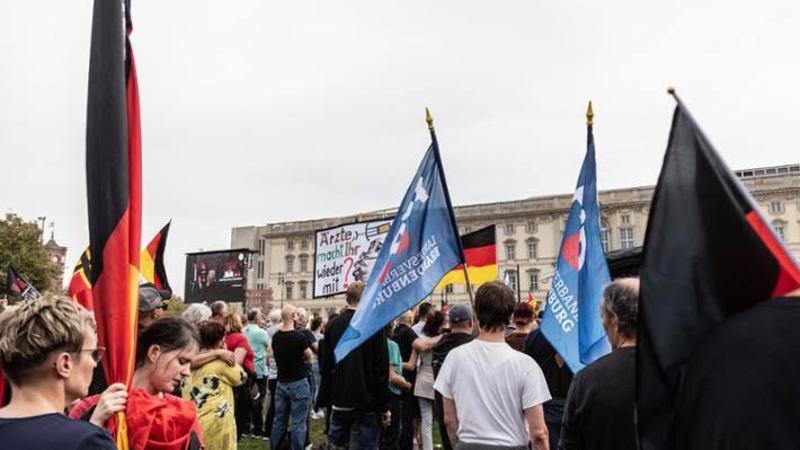
The recent success of the “new” right in Saxony confirms a trend that cannot be explained by temporary circumstances, since it is widespread throughout the West: above all, it is the poorer part of the population that votes for the new right rather than for the left, as was traditionally the case.
This fact seems to cast doubt on the model that became established in the West and was later extended to East Asia as well.
We therefore need to understand why this is happening among poorer voters.
Instead, many representatives of the traditional parties simply think that poor voters for the new right are just stupid and ignorant people. This seems too simplistic to me: ignorance and intelligence, after all, are two different things.
It also seems foolish to think that if other people do not think as we do, they must be stupid. People’s stupidity and intelligence were more or less the same when they voted for the left some time ago.
I believe, rather, that poorer people often understand political situations better than intellectuals (or pseudo-intellectuals, the radical chic), who are blinded by ideology.
I would give the example of Garibaldi’s conquest of the Kingdom of Naples. All the intellectuals were convinced that they were liberating the people from the oppression of absolute power. They did not even realize that the peasant masses, instead, supported the Bourbons, even taking up arms in their defense. When they did realize this, they attributed it simply to ignorance.
But the peasants were right, because, in fact, their position worsened under the new regime, while only the wealthy bourgeoisie (or the middle class, if one prefers) really benefited, as historiography now recognizes.
Indeed, only a few years after the events, Verga described this phenomenon in Mastro-don Gesualdo, because he was a realist writer who portrayed reality rather than romantic fantasies.
We must therefore understand the reasons for what appears to be an inversion of the natural tendency of voters, by looking at the real reasons why the left is in crisis. A historical phenomenon cannot be explained by saying that people are stupid. Logically, if people are moving more to the right than to the left, it cannot be because of stupidity, because their level of intelligence has remained more or less the same; there must be reasons for this. The mythical hidden persuaders have nothing to do with it.
Globalization and Immigration
The liberalism of Marx’s time has not existed for a century; the liberalism of the various fascist regimes disappeared in a tragic whirlwind of wars 80 years ago; communism collapsed 50 years ago: all three were swept away by history.
The economic model underlying the whole of the West can be defined as the “welfare state.” It emerged through workers’ struggles led by the democratic left (not the anti-system left), which is itself part of the system. The model was subsequently accepted, in substance, by the democratic right as well, although the latter is somewhat more economically liberal and less interventionist. But, essentially, there is not much difference between the traditional right and left, which also helps explain the decline in voter turnout.
In fact, the right and the left pursue similar policies; identity issues therefore become more important.
The West’s economic model is essentially regulated liberalism, with state intervention that redistributes income and administers more than 40% of national income. This creates not only social justice but also economic development, because if there is only poverty, there is no market and therefore neither production nor development.
The Western economic model has brought us the greatest prosperity in the world. Certainly, poor people still exist, but they are a minority, whereas previously they constituted the overwhelming majority. In the past, people died of starvation during famines; today, even people living in absolute poverty do not suffer from hunger.
The Western model has given the great majority of people a standard of living that had previously never even been dreamed of and has reduced extreme misery to a minority, whereas nineteenth-century forecasts predicted the opposite in what they claimed were scientific terms. Nevertheless, major differences in income and considerable injustice still remain.
The model subsequently spread, bringing major development to poor countries, especially in East Asia: China and India, in particular, have achieved economic progress that is at times truly astonishing.
But it appears that the welfare-state model is now in crisis because of economic globalization and also immigration. In fact, the model presupposes an essentially national economy within which corrective rules can be applied; but in a globalized economy, such rules cannot be effectively applied. As a result, goods and workers from poorer countries compete with those in the West.
For example, there has been much discussion about taxing multinational corporations, including oil companies. But, in reality, if a single country does so, other countries will attract the capital, and that country will lose competitiveness, and so on, leading toward industrial decline.
We can raise wages by law, but this means that our goods become less competitive.
Globalization raises the problem of competition from developing countries, especially those in East Asia.
But how can we compete with countries where labor costs one-tenth of what we pay? The problem is that policies regulating the economy and redistributing income are not possible in a globalized world: laws would also have to be globalized, but that is not possible.
The result, therefore, is industrial desertification in many sectors, particularly those involving less sophisticated goods, and consequently unemployment among less-skilled workers.
Immigration can be regarded as the other side of globalization.
Wages are regulated by collective bargaining agreements and by laws that protect workers.
The essential point, however, is the relationship between supply and demand: if the law establishes a wage of 100 euros for picking tomatoes, but then there is a non-EU immigrant willing to do it for 10 euros, the employer will inevitably hire the latter. On the other hand, why would an employer hire an immigrant if, under the same conditions, he could hire an Italian?
In reality, all starvation wages are always illegal: they do not comply with contractual rules. Laws protecting workers are important, but what ultimately matters is whether they are compatible with the relationship between supply and demand.
In developed countries, people with a good income can obtain labor at a lower cost (waiters, caregivers, manual workers) and are not threatened by competition in their own professional field, which is too highly skilled for immigrants to compete in.
The poorest part of the population, on the other hand, faces competition from immigrants for jobs and wages.
In short, for example, someone with a good income enjoys all the advantages of paying less for a foreign domestic worker or caregiver, while a poor woman may no longer find work as a domestic worker or caregiver (or even as a prostitute).
According to ISTAT statistics, 30% of families living in absolute poverty are immigrant families, but we do not know how many families are of foreign origin but are now Italian citizens.
The Left
Faced with the difficulty of carrying out its role of regulating labor and redistributing income, the left therefore tends to identify itself with a, so to speak, progressive ideology.
We must, however, consider that the more modernist positions tend to be those of the higher social classes, whereas poorer people tend to be more traditional. Gay people are more widely accepted in Parioli and much less so in Garbatella.
In reality, MAGA, as promised by Trump, meant tariffs on foreign goods and an end to immigration, together with disengagement from supporting our ideology around the world.
The fact is that Trump is now doing exactly the opposite, and doing it very badly as well—but that is another matter.
The fact is that less-educated people are, culturally speaking—that is, in their way of thinking—more closely attached to traditional values. This does not necessarily mean that they are wrong.
It should also be taken into account that cultural differences have an impact on the poorest, rather than on the richest.
Wealthy women hire waitresses without knowing anything about their culture; they often do not even know where they come from, simply because they cost less and provide more value for money.
But immigrants tend to live in poorer neighborhoods, and therefore it is the poor who experience cultural differences.
When I pass through the old poor neighborhoods of my city, I sometimes feel as though I am no longer in Italy but in some corner of the Third World.
Another particular issue for Western countries, and one that emerges most clearly, is the war in Ukraine. Traditional parties, especially those on the left, argue that defending Ukraine means defending Europe, which Putin would threaten; that Ukraine is fighting for us; in short, that the war in Ukraine is our war.
But the poorest people do not see any threat from Putin to their living conditions. Instead, they see that the interruption of economic relations with Russia (especially cheap gas) has put the economy under strain, particularly in Germany, and that the cost of rearmament in preparation for a hypothetical Russian invasion inevitably reduces healthcare provision and the entire welfare system on which they depend heavily.
The new right, on the other hand, calls for neutrality in the war in Ukraine (rather than support for Putin); in reality, the anti-system left takes a similar position.
Conclusion
Therefore, poor people are moving to the right because the right promises to fight globalization and immigration, which is one aspect of it, and does not reduce welfare spending in order to help Ukraine and rearm, whereas the left accepts globalization, strongly supports immigration, and takes an interventionist position on Ukraine.
The left’s arguments concerning constitutional freedoms, the threat posed by Putin to democracies, gay rights, feminism, and militant anti-fascism do not interest the poorest people, who are struggling with much more immediate problems, such as making ends meet.
Now, this does not necessarily mean that the new or traditional right will actually succeed in doing what it promises: so far, the right has not reduced imports, nor has it stopped migrants.
These are complex problems, which are difficult to solve. But as long as the democratic left does not understand this, it will continue to lose the votes of the poorest people.
Globalization is a major engine of economic progress for poor and developing countries, especially in East Asia. But right-wing voters believe—rightly or wrongly—that lower wages and fewer services are a consequence of globalization and immigration in wealthy countries and that these phenomena therefore need to be regulated and limited. This is what right-wing parties promise, although it remains uncertain whether they will actually be able to do so.
Even though the fundamental reason is competition in the labor market, cultural differences may also play a role, which is why poor people no longer vote for the left.